
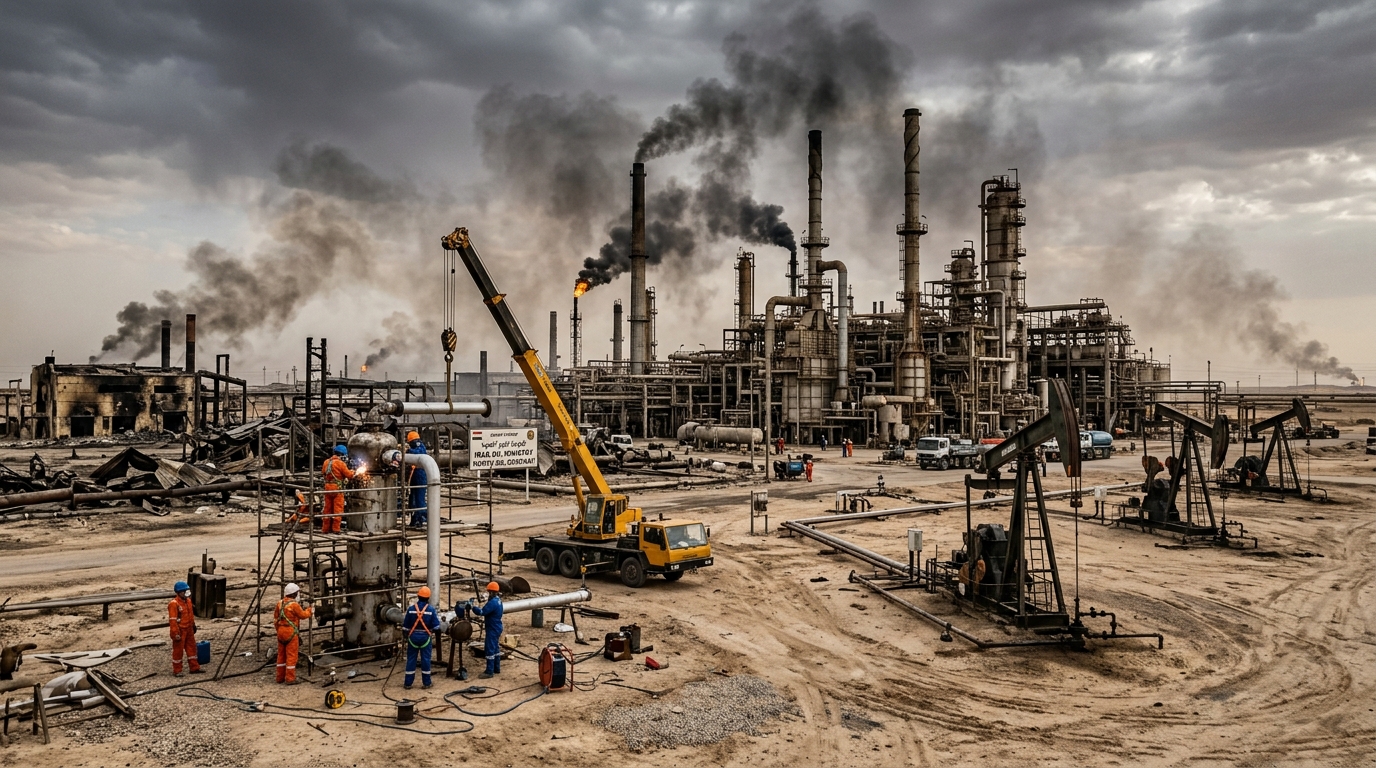
Iraq's oil sector faces a critical recovery challenge as the nation attempts to restore production capacity devastated by the regional conflict between the United States, Israel, and Iran. The Iraqi Oil Ministry announced Saturday that production has plummeted approximately 60 percent from pre-war levels, declining from 3.3 million barrels daily to just 1.3 million barrels as military operations disrupted extraction, refining, and export infrastructure. Ministry spokesman Salim Farhoud stated that restoration efforts are underway with operating companies beginning comprehensive rehabilitation of damaged facilities, though he cautioned that achieving pre-war production levels within one to two months represents an optimistic timeline dependent on successful completion of complex technical repairs. Iraq's proven oil reserves, estimated at 145 billion barrels, position the nation among the world's largest petroleum producers, making the production collapse a significant factor in global energy markets and international economic stability. The dramatic reduction in Iraqi oil exports has contributed to broader energy supply disruptions affecting global markets and contributing to inflationary pressures worldwide.
The production collapse reflects the broader economic devastation inflicted by the regional conflict on Iraq and surrounding nations. Iraqi oil infrastructure suffered extensive damage from military operations, with production facilities, pipelines, and export terminals targeted or disrupted by combat activities. The ministry acknowledged that different oil fields face varying recovery timelines based on the extent of damage and operational capacity constraints, with southern fields potentially returning to previous production levels faster than northern facilities. Iraq's ability to restore oil production carries significant implications for global energy security, as the nation's petroleum exports represent a crucial component of international crude oil supplies. The recovery effort also depends on maintaining security and stability in oil-producing regions, which remain vulnerable to renewed conflict or militant activity. International energy markets have responded to Iraqi production disruptions with price volatility, though the recent US-Iran ceasefire agreement has provided some stabilization as traders anticipate potential reopening of the Strait of Hormuz and resumption of Iranian oil exports.
.png)
.png)
.png)
.png)
.png)
.png)
.png)
.png)