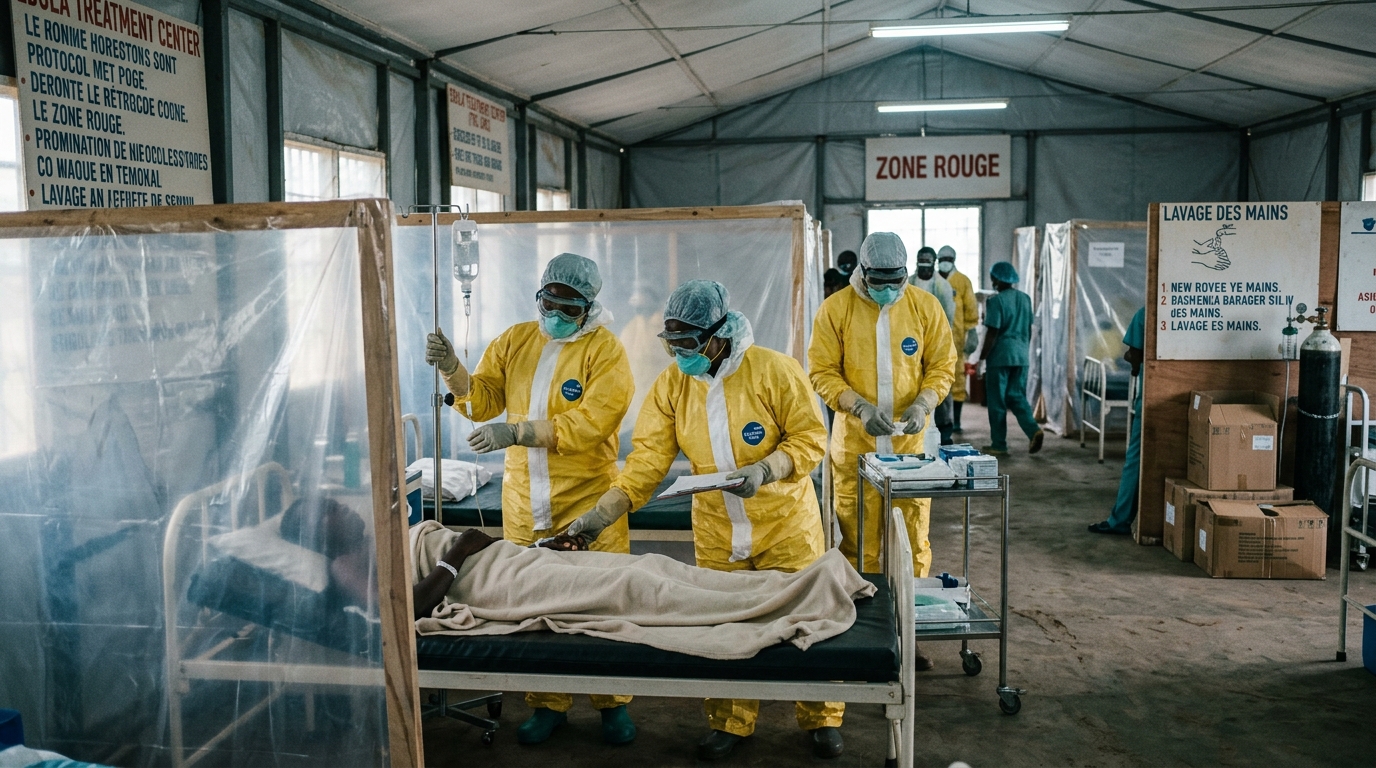
The Ebola outbreak in the Democratic Republic of Congo and Uganda has reached alarming proportions, with confirmed cases exceeding 800 and deaths surpassing 230 as of mid-June 2026, prompting the World Health Organization to declare the situation a public health emergency of international concern. The outbreak, caused by the Bundibugyo strain of Ebola virus, represents one of the most serious infectious disease crises in recent years and has overwhelmed healthcare systems in affected regions. The Democratic Republic of Congo has reported 782 confirmed cases with 232 deaths as of June 13, 2026, while Uganda has confirmed 19 cases with two deaths, indicating that the outbreak remains primarily concentrated in the DRC but poses significant regional transmission risks. The outbreak began in May 2026 in the Ituri Province of the Democratic Republic of Congo, specifically in the Mongbwalu Health Zone, where initial cases were identified among healthcare workers and community members. The rapid spread of the virus has been attributed to inadequate infection prevention and control measures in healthcare facilities, limited public awareness about transmission prevention, and challenges in accessing affected communities for contact tracing and vaccination efforts. The Bundibugyo strain of Ebola, while less lethal than some other Ebola variants, has demonstrated significant transmissibility in the current outbreak, with healthcare workers representing a disproportionate share of confirmed cases. International health organizations have mobilized resources to support outbreak response efforts, including deployment of medical personnel, provision of personal protective equipment, and establishment of Ebola treatment centers in affected regions. The World Health Organization has coordinated international response efforts and has provided technical guidance to national health authorities regarding outbreak containment strategies. Vaccination campaigns have been initiated in affected regions, with healthcare workers and high-risk populations prioritized for immunization. However, vaccine availability remains limited, and distribution challenges have hindered vaccination efforts in remote areas. The outbreak has created significant humanitarian challenges, with healthcare systems overwhelmed by patient volumes and healthcare workers facing extreme occupational hazards. International humanitarian organizations have established emergency medical facilities and have provided support to affected communities. The outbreak has also disrupted routine healthcare services in affected regions, with patients avoiding healthcare facilities due to fear of Ebola transmission. The situation remains highly volatile, with potential for further spread if containment measures prove inadequate.
The Ebola outbreak has significant implications for regional and global health security, highlighting the vulnerability of healthcare systems in resource-limited settings and the challenges of responding to emerging infectious disease threats. The outbreak has prompted international concern about the potential for further spread to neighboring countries and the possibility of international transmission through travel. International health authorities have implemented enhanced surveillance measures at borders and airports to detect potential cases and prevent international spread. The outbreak has also raised questions about the adequacy of international preparedness for infectious disease emergencies and the need for enhanced investment in healthcare infrastructure and disease surveillance systems in vulnerable regions. The African Centers for Disease Control and Prevention has coordinated regional response efforts and has provided support to affected countries. International donors have pledged financial assistance to support outbreak response activities, though funding levels remain below estimated requirements. The outbreak has also highlighted the importance of community engagement and public communication in outbreak response, with health authorities working to build trust and encourage compliance with prevention measures. Healthcare workers have demonstrated remarkable dedication despite extreme occupational hazards, with many continuing to provide care despite personal risks. The outcome of the outbreak will depend on the effectiveness of containment measures, the adequacy of international support, and the cooperation of affected communities in implementing prevention strategies. The coming weeks will be critical in determining whether the outbreak can be controlled or whether it will continue to spread and cause additional deaths. The international community remains focused on supporting outbreak response efforts and preventing further transmission of the virus.
.png)
.png)
.png)
.png)
.png)
.png)
.png)
.png)